Bridge the Gap Between Teen Resistance and Real Breakthroughs
Modern adolescents are navigating an unprecedented landscape of pressures: algorithm-driven screen addiction, social media comparison traps, intense academic expectations, shifting friendships, and rapid neurobiological changes.
When teens walk into your therapy room, they are often overwhelmed, shut down, or skeptical of adults trying to "fix" them. Handing them a dense, text-heavy adult worksheet—or a childish elementary handout—instantly ruptures rapport.
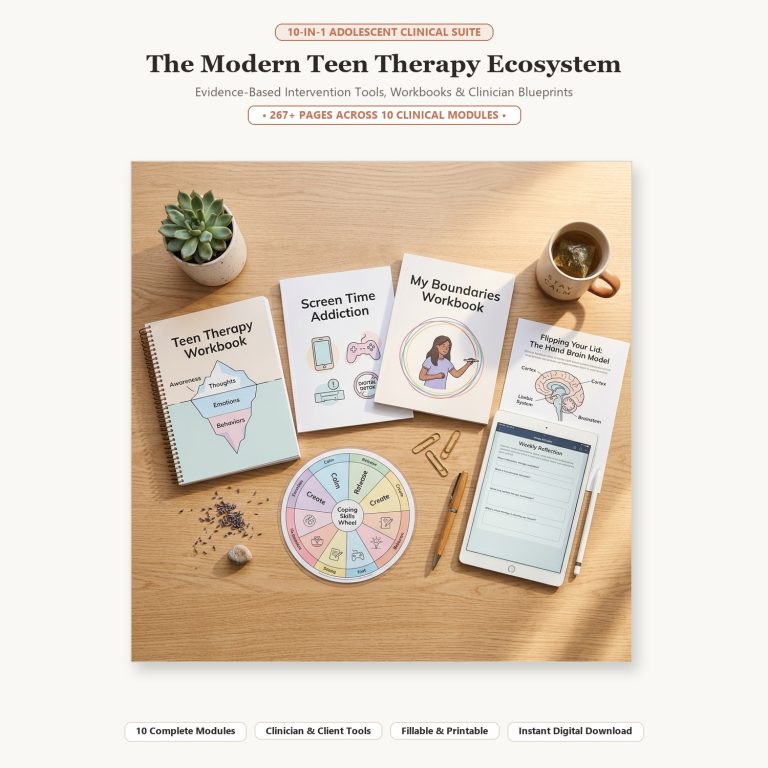
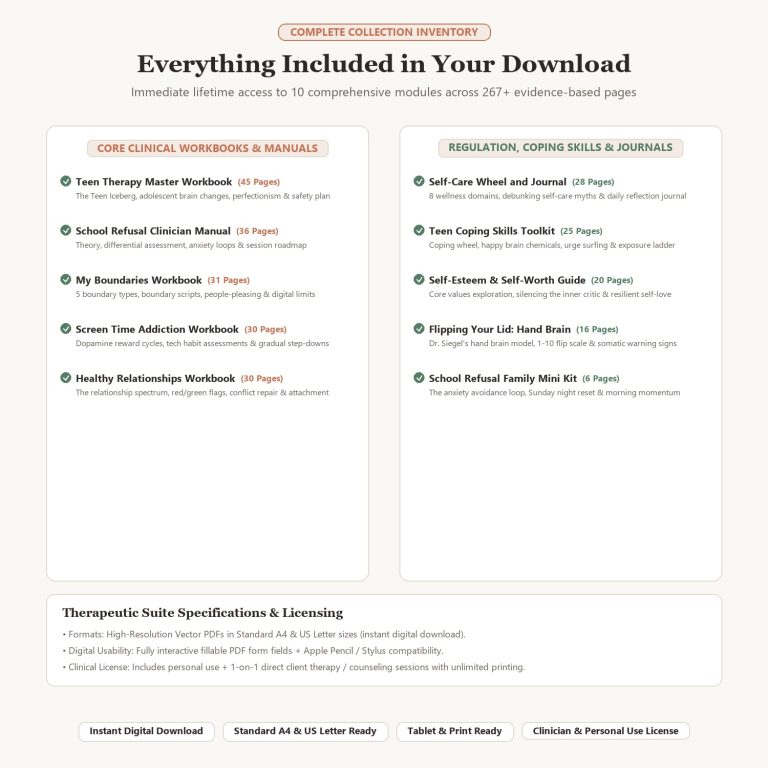
The Modern Teen Therapy Ecosystem (10-in-1 Clinical Suite) gives you 267 pages of age-appropriate, zero-cringe, evidence-based psychoeducation and interactive worksheets designed specifically for the adolescent brain.
What’s Inside This 10-Part Adolescent Ecosystem? (267 Pages Total)
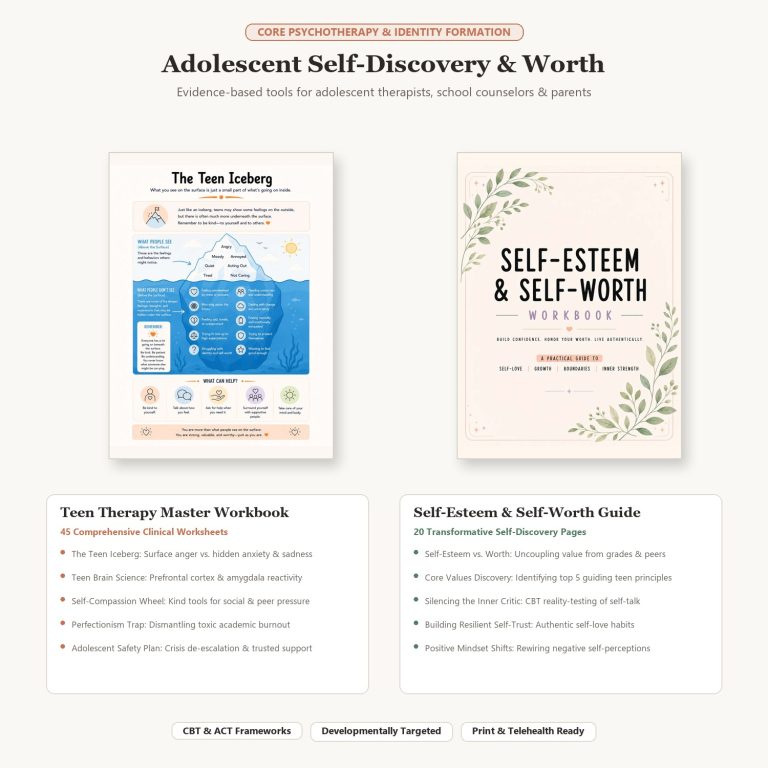
1. The Comprehensive Teen Therapy Workbook (45 Pages)
Your go-to foundational workbook for general adolescent counseling, exploring what happens beneath the surface.
- Brain, Body & Puberty Science: Features The Teen Iceberg (Above vs. Below the Surface), The Teenage Brain Explained (Prefrontal Cortex vs. Limbic System), and accessible guides on how Hormones (Estrogen, Testosterone, Cortisol, Dopamine, Serotonin) and Puberty impact mood and sleep.
- Body Image & Social Media Literacy: Unpacks filters, photo editing, comparison traps, and building an Identity Shield (What Makes Me More Than My Appearance).
- Academic Pressure & Future Planning: Includes a School Stress Survival Guide (the 50/10 study rule), The Perfectionism Trap, a Mental Health Safety Plan, and Life After School pathway exploration (University, Vocational/Artisan paths, Apprenticeships, Work, and Gap Years).
- Family & Peer Dynamics: Tools for navigating changing family rules, communicating with parents using "I" statements, and overcoming social anxiety.
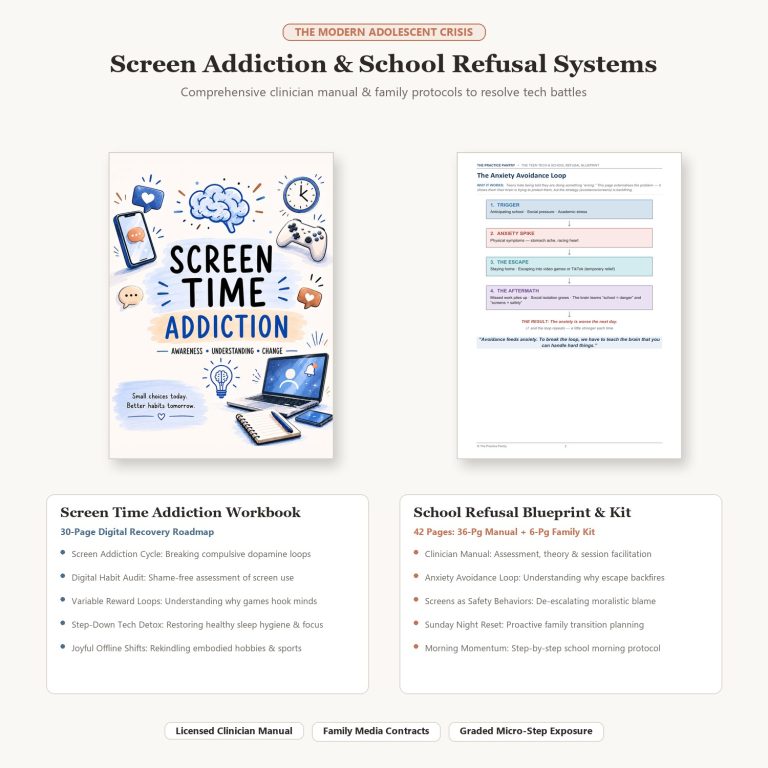
2. Screen Time Addiction & Digital Balance Workbook (30 Pages)
Move beyond power struggles by teaching teens
why their devices are engineered to hook their brains—and how to take back control.
- The Neuroscience of Scrolling: Visualizes The Brain’s Reward Pathway (Ventral Tegmental Area, Nucleus Accumbens, Prefrontal Cortex, and Dopamine habit loops) alongside a scored Screen Habits Assessment and Digital Life Pie Chart.
- Impulse Control & Urge Surfing: Features a 15-card Internal vs. External Trigger Sort, The 4-Step Phone Pause (STOP), and Urge Surfing for Screen Cravings (riding the 20-minute urge wave).
- Sustainable Digital Detoxing: Includes a Social Media Reality Check, What Needs Are Screens Meeting?, an Offline Activity Menu, a Screen-Free Challenge Planner (1-hour to full weekend), and a self-directed Healthy Technology Agreement.
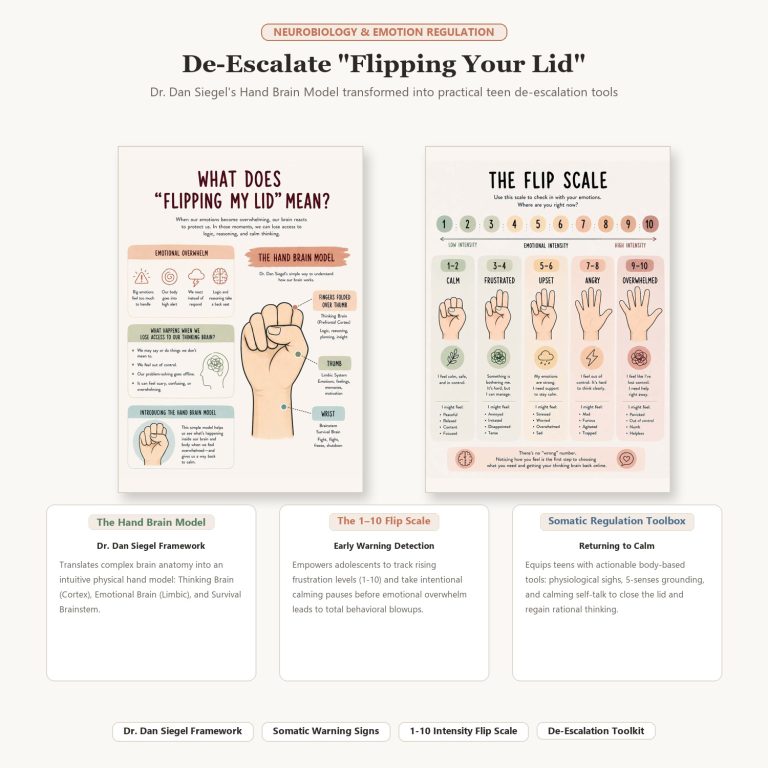
3. "Flipping Your Lid": The Hand Brain Model & Regulation Workbook (16 Pages)
Translates Dr. Dan Siegel’s renowned
Hand Model of the Brain into an empowering, shame-free anger and impulse-control toolkit.
- Visualizing Dysregulation: Shows teens exactly how the Thinking Brain (folded fingers/Prefrontal Cortex), Feeling Brain (thumb/Limbic System), and Survival Brain (wrist/Brainstem) interact when they "flip their lid."
- Early Warning Systems: Features The 5-Stage Hand Flip Scale (Calm to Overwhelmed), somatic pre-flip body mapping, and a Traffic Light Early Warning System (Green, Yellow, Red).
- Bringing the Brain Back Online: Includes The STOP Skill Builder, Responding vs. Reacting comparison logs, a Regulation Toolbox, and a personalized Flip Action Plan.
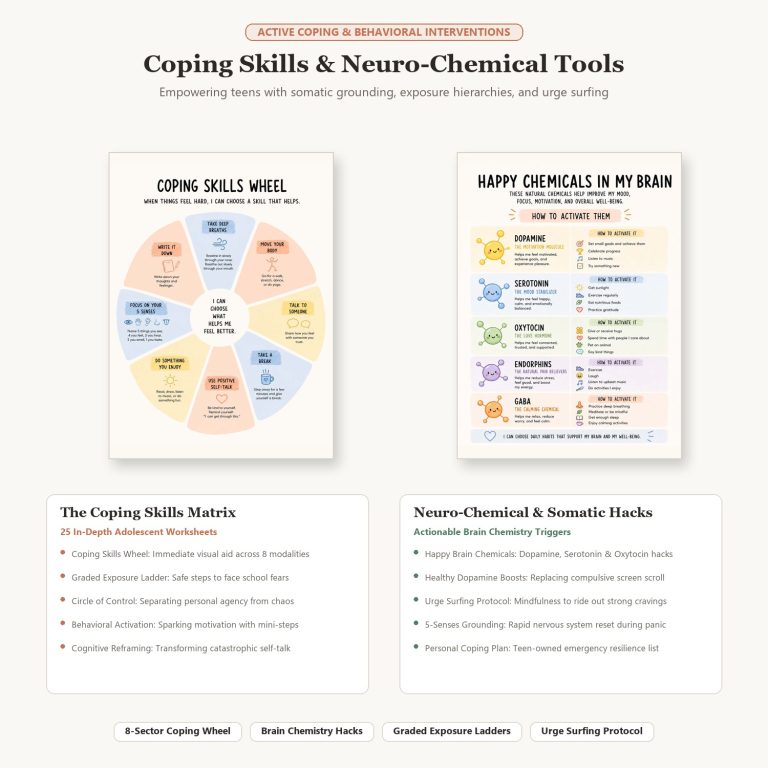
4. The Teen Coping Skills & Emotional Regulation Pack (25 Pages)
An action-packed collection of standalone visual handouts and active CBT/DBT skill-builders.
- Neurotransmitters Made Simple: Features two illustrated guides to The Happy Chemicals in Your Brain (Dopamine, Serotonin, Oxytocin, Endorphins, Noradrenaline, and GABA) and natural daily habits to activate them.
- Anxiety, Anger & Urge Tools: Includes a 10-step Exposure Ladder, a 7-step Anger Meltdown Reset, an illustrated Worry Trigger Island Map, Circle of Control, Thought Detective Maps, and Thought Detangling sheets.
- Somatic & Grounding Aids: Features an A–Z Sensory Grounding Guide, Box / Balloon / 5-Finger Breathing, a Feelings Wheel, and a Weekly Behaviour Activation Plan.
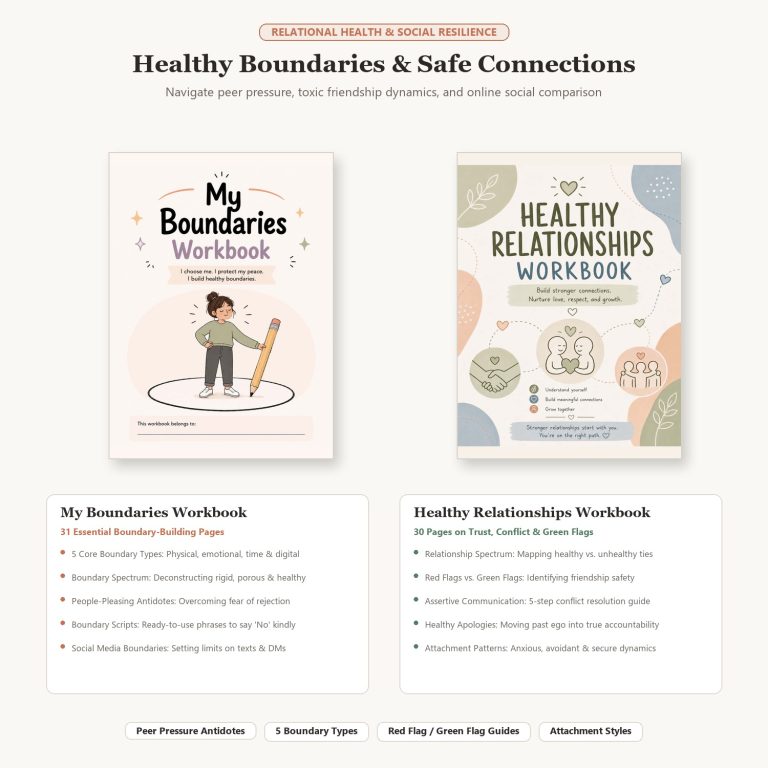
5. Healthy Relationships & Attachment Workbook (30 Pages)
Equip teens to navigate friendships, dating, peer conflict, and family relationships with emotional safety and self-respect.
- Evaluating Relationships: Covers The Relationship Spectrum (Healthy, Unhealthy, Toxic), Red Flags vs. Green Flags, and an accessible overview of The 4 Attachment Styles (Secure, Anxious, Avoidant, Fearful-Avoidant).
- Communication & Conflict Resolution: Breaks down Passive, Aggressive, Passive-Aggressive, and Assertive pathways, a 5-Step Conflict Resolution Protocol, and The 5 Building Blocks of a Healthy Apology (Acknowledge, Responsibility, Remorse, Repair, Change).
- Forgiveness & Consent: Includes a 5-step Forgiveness & Letting Go journey, Respecting Others' Boundaries & Consent, and a Relationship Values & Needs Assessment.
6. Self-Esteem & Self-Worth Workbook (20 Pages)
Help teens untangle their self-worth from grades, likes, and external approval.
- Foundations of Worth: Contrasts Healthy vs. Fragile Self-Esteem and Internal vs. External Validation, paired with a 6-domain Self-Esteem Check-In.
- Strengths & Values Discovery: Includes a 25-item Core Values Clarification, a Personal Strengths Shield, and the Character Strengths Wheel (Wisdom, Courage, Humanity, Justice, Temperance, Transcendence).
- Integrity & Cognitive Reframing: Maps how core beliefs drive behaviors, challenges limiting beliefs, and builds self-trust through Keeping Promises to Myself and a Personal Self-Worth Statement.
7. My Personal Boundaries Workbook (31 Pages)
The complete guide to helping adolescents overcome people-pleasing, peer pressure, and false guilt.
- The 5 Boundary Domains: Deep dives into Physical, Emotional, Mental, Time, and Digital boundaries, plus Rigid, Porous, and Healthy styles on The Boundary Spectrum.
- Untangling People-Pleasing & Guilt: Explores the hidden costs of people-pleasing and distinguishes between Healthy Guilt vs. False Guilt.
- Assertive Scripts & Roleplays: Features a Go-To Boundary Scripts Toolkit, real-life practice scenarios (School, Friends, Family, Dating), and spotting relational manipulation.
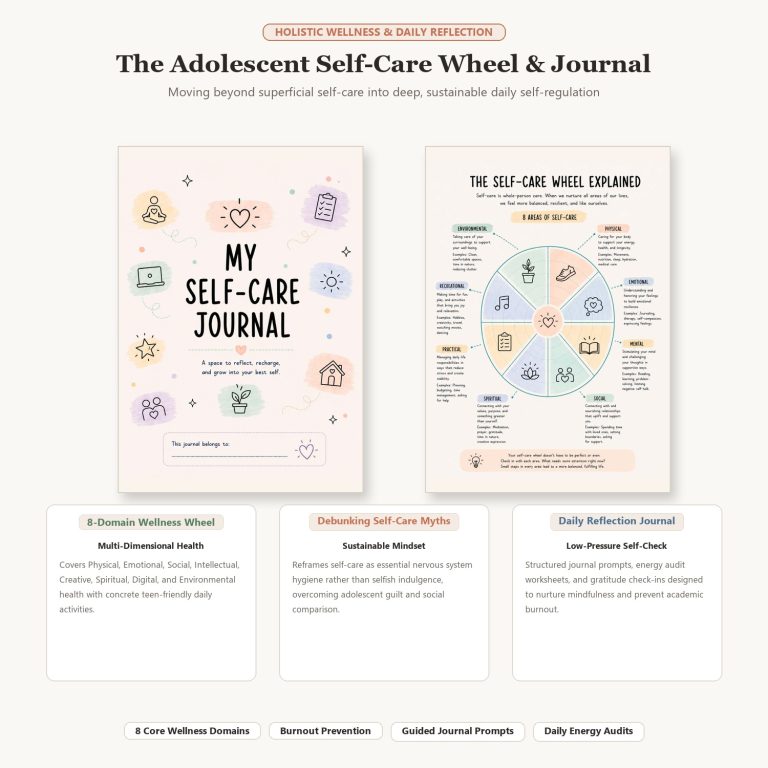
8. My Self-Care Wheel Journal (28 Pages)
Shifts teens from viewing self-care as a luxury to essential daily burnout prevention.
- The 8-Part Self-Care Wheel: Audits across Physical, Emotional, Mental, Spiritual, Social, Practical, Environmental, and Recreational wellness.
- Battery & Clutter Management: Features the Emotional Battery and Social Battery gauges, a Mental Clutter Brain Dump, an Environment Audit (Bedroom, Study Space, Digital Space), and a 50 Things That Bring Me Joy tracker.
9 & 10. The Teen Tech & School Refusal Blueprint: 6-Page Mini-Kit + 36-Page Clinician’s Manual
When a teen is locked in morning school-refusal panic and escaping into screens, traditional punitive contracts backfire.
- The 6-Page Client Mini-Toolkit: Includes The Anxiety Avoidance Loop, Our Family Tech & Connection Agreement, The Sunday Night Reset, The Morning Momentum Ladder (graded micro-steps), and the Clinician’s Buy-In Script.
- The 36-Page Clinician’s Evidence-Based Practice Manual: A rigorous clinical companion covering Two-Factor Avoidance Learning (Mowrer), Inhibitory Learning (Craske), the SPACE Model for reducing family accommodation (Lebowitz), Self-Determination Theory, Differential & Functional Assessment (Kearney & Silverman’s 4 functions), full case vignettes, adaptations for Neurodivergent (Autistic/ADHD) and LGBTQIA+ teens, a reproducible Progress Note template, and a Parent Handout.
Why This Master Bundle is a Game-Changer for Your Practice
- Both Client-Facing & Clinician-Supported: You don’t just get 231 pages of teen-friendly worksheets—you also get a 36-page academic-grade Clinician's Manual to guide your complex family and school-refusal formulations.
- Neuro-Affirming & Non-Patronizing: Uses mechanism-based, externalizing language ("how your brain's alarm system works") that teens respect and engage with.
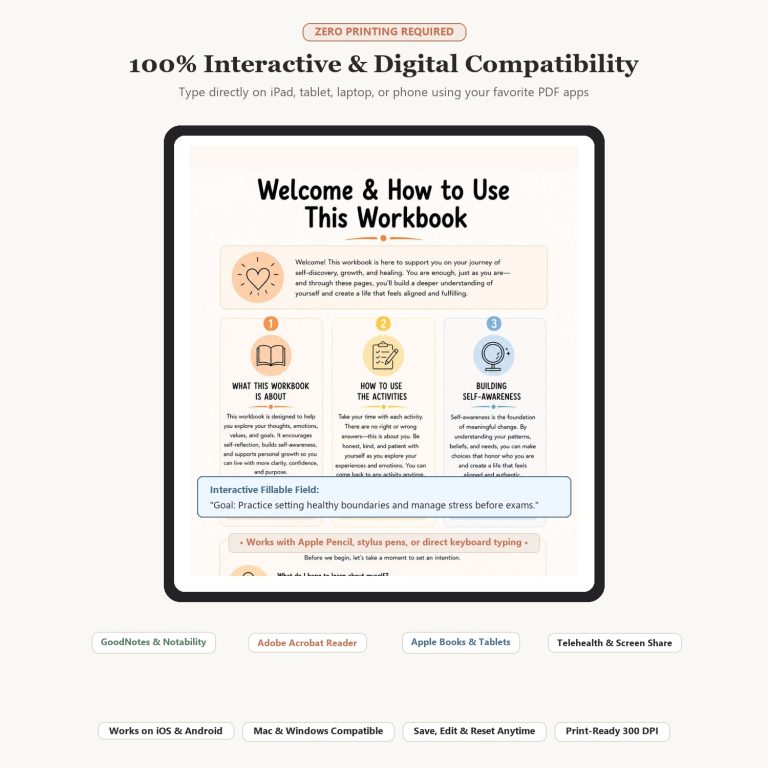
- Saves Hundreds of Unbillable Hours: Print individual pages for in-session breakthroughs, hand parents structured agreements, or assign full workbooks for between-session growth.
Who is this for?
Designed for
Educational, Clinical, and Counselling Psychologists, Registered Counsellors, School Counsellors, Social Workers, and Occupational Therapists working with pre-teens, adolescents, and high school learners (ages 11 – 18).