

The Practice Pantry
Beyond the 50-Minute Hour: Using Psychoeducational Handouts Effectively
Elevate your standard of care and save hours of prep time by replacing hastily drawn diagrams with beautifully designed psychoeducational frameworks that anchor your clients between sessions.
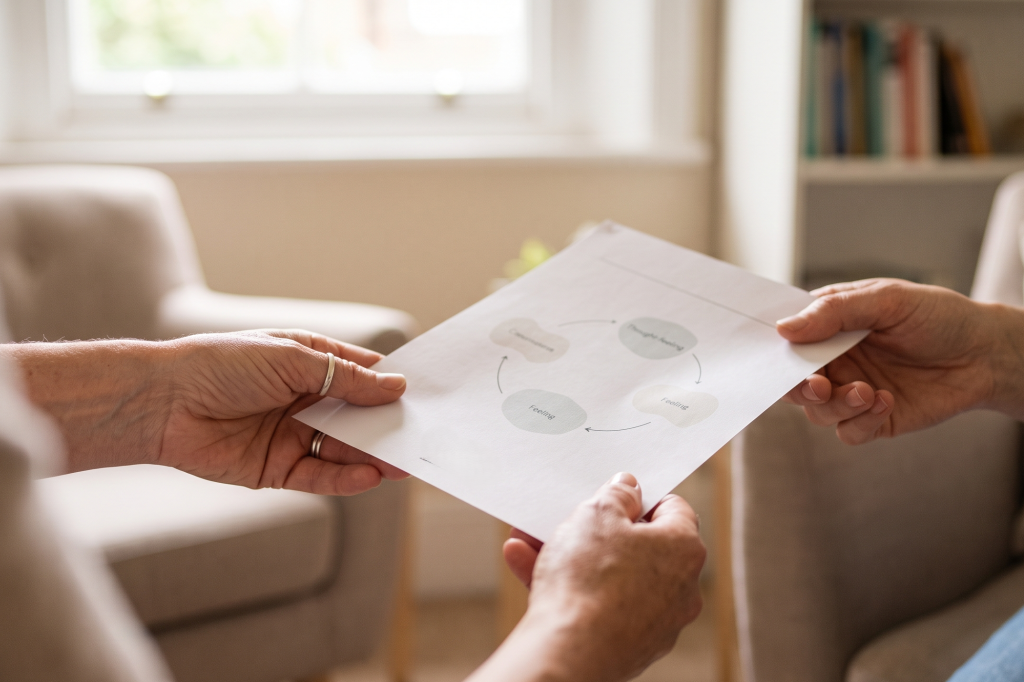
We have all experienced this clinical moment: you spend a session beautifully unpacking a complex dynamic with a client. You map out their cognitive distortions, trace the roots of their anxiety, and establish a clear coping strategy. They nod, they understand, and the breakthrough feels tangible.
Then, they return the following week, and it is as if the conversation never happened.
The reality of modern therapy is that the 50-minute clinical hour is often not enough to solidify new neural pathways or behavioral changes, especially when a client is returning to a highly stressful environment. When clients are emotionally dysregulated, their capacity to retain complex verbal information drops significantly.
This is where the strategic use of psychoeducational handouts becomes one of the most powerful tools in your therapeutic arsenal.
The Problem with "Talk-Only" Therapy in High-Stress Clients
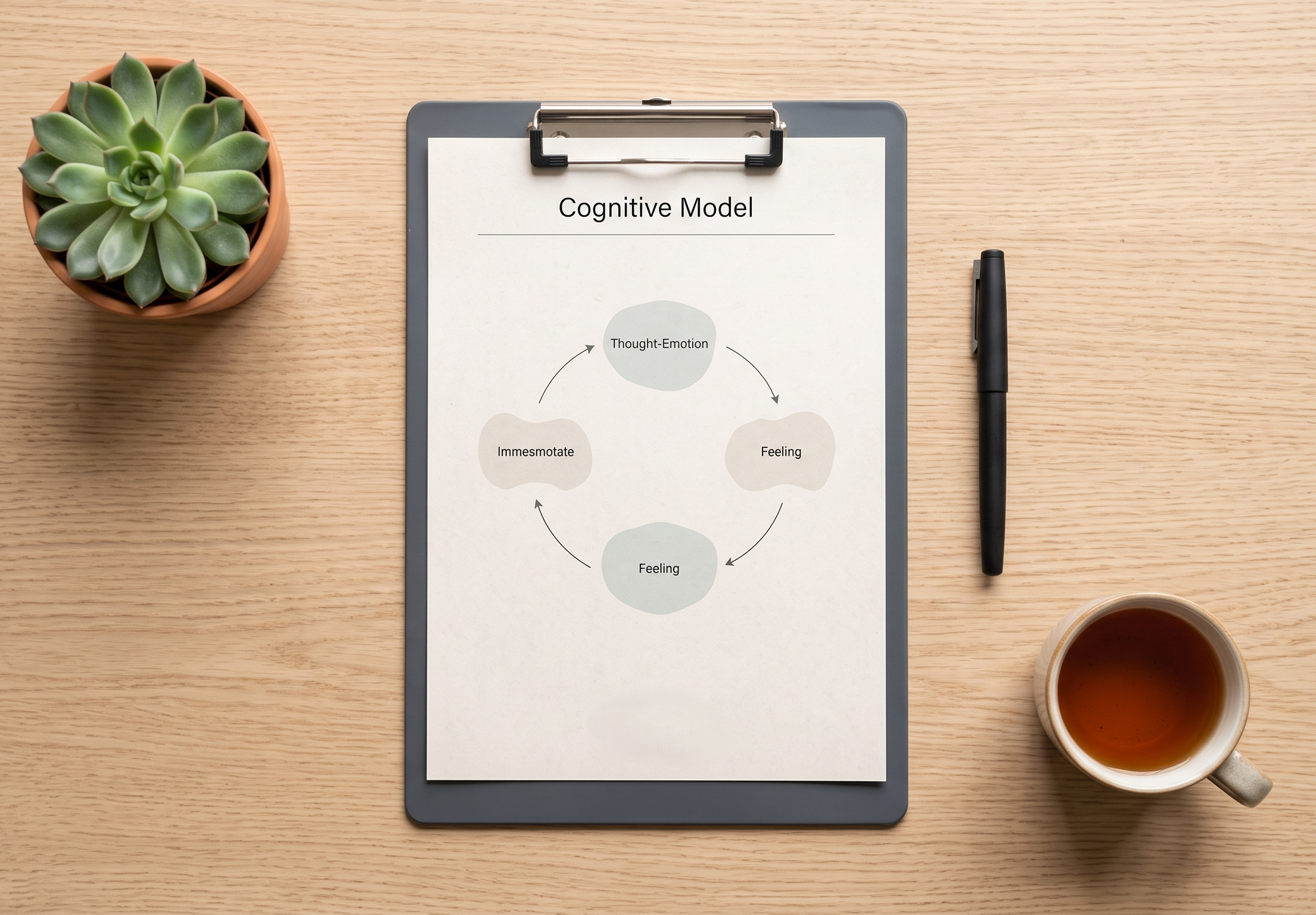
When we explain concepts like the “fight, flight, or freeze” response or the CBT Triangle (the interplay between thoughts, feelings, and behaviors) verbally, we are asking a dysregulated nervous system to perform high-level cognitive processing.
For many clients, psychological jargon can feel overwhelming. Trying to remember the difference between “catastrophizing” and “black-and-white thinking” while in the middle of a panic attack is nearly impossible. They don’t need another lecture; they need an anchor.
Visual Frameworks Prevent Cognitive Overload
Providing a well-designed, physical (or digital) handout during a session completely shifts the cognitive load.
It externalizes the problem: Looking together at a diagram of a “Nervous System Map” allows the client to point to a stage of dysregulation and say, “That’s where I am.” The problem is no longer inside them; it is on the paper in front of them, making it objective and manageable.
It accommodates different learning styles: Many adults are visual or kinesthetic learners. A beautifully structured worksheet allows them to process the information through reading, seeing spatial relationships (like triangles or flowcharts), and physically writing down their own experiences.
It creates a shared language: When you give a client a “Grounding Techniques” checklist, you are giving them specific vocabulary to use when they report back to you next week.
Reframing "Homework" as "Self-Exploration"
One of the biggest hurdles practitioners face is client resistance to therapy “homework.” If a worksheet looks like a sterile, densely typed medical form, it feels like a chore. It feels like school.
However, when psychoeducational tools are beautifully formatted, easy to read, and clearly structured, they feel like premium self-care resources. You aren’t assigning homework; you are providing a guided journal for self-exploration.
The "Takeaway" Builds the Therapeutic Alliance
There is also a profound psychological comfort in leaving a therapy session with something tangible. A physical handout serves as a transitional object. When a client puts a “Boundary Setting Framework” on their fridge or saves a “Mood Tracker” to their phone, they are taking a piece of the safety and clarity of the therapy room home with them.
It reminds them that your support extends beyond the 50-minute hour.
Upgrading Your Clinical Toolkit
If you are currently sketching out CBT triangles on the back of scrap paper during sessions, or spending your evenings trying to format Word documents to look presentable, you are draining your own clinical energy.
Your psychoeducational materials should reflect the high standard of care you provide.
At The Practice Pantry, we have developed a library of evidence-based, beautifully designed psychoeducational worksheets and clinical toolkits. They are ready to be branded with your practice details and handed directly to your clients, saving you hours of prep time while dramatically increasing client engagement.
Ready to enhance your clinical interventions? Explore our Psychoeducational Toolkits here and give your clients the visual anchors they need to thrive between sessions.